The Six Most Common Types of Asbestos
Asbestos is a term used to describe a variety of naturally occurring fibrous materials that have crystallised into fibres. These are minerals that do not dissolve in water and are immune to heat, fire, and chemical and biological deterioration. But asbestos is mechanically strong and hazardous enough to cause 5,000 deaths every year from exposure to it.
Even though the United Kingdom banned the substances in 2000, they might still be found in buildings and on the ground where they were installed at a time when asbestos use was common in construction. Contractors or workers who come into contact with asbestos while performing maintenance work may be at risk.
However, six types of asbestos was used frequently and are commonly found during demolition and pose a health risk from asbestos exposure? Before moving forward, it is necessary to examine the potential risks of different asbestos types, and being exposed to asbestos, more closely.
Definition of Asbestos
Asbestos is a fibrous substance used in constructions from the 1950s to the 1980s. Countries such as Brazil, Russia, South Africa, and China continue to extract it today. It is mixed with cement or made into fibres around the world, making it an ideal electrical and building insulation material.
Asbestos has been banned in the UK due to several occurrences of lung disease among construction workers who have come into contact with it. Today, nearly 50 countries prohibit the use of asbestos. Other countries around the world, including India, China, Russia, and Indonesia, continue to use the material.
What are the different types of Asbestos?
- Serpentine asbestos or white asbestos: Defined by its curly, flexible fibres, that appear serpentine in structure in the context of asbestos.
- Amphibole asbestos: Defined by straight, needle-like fibres that are more brittle and less flexible than serpentine fibres. This group of minerals is considered more harmful due to their sharp, inflexible fibres, which can lodge more easily in the lungs.
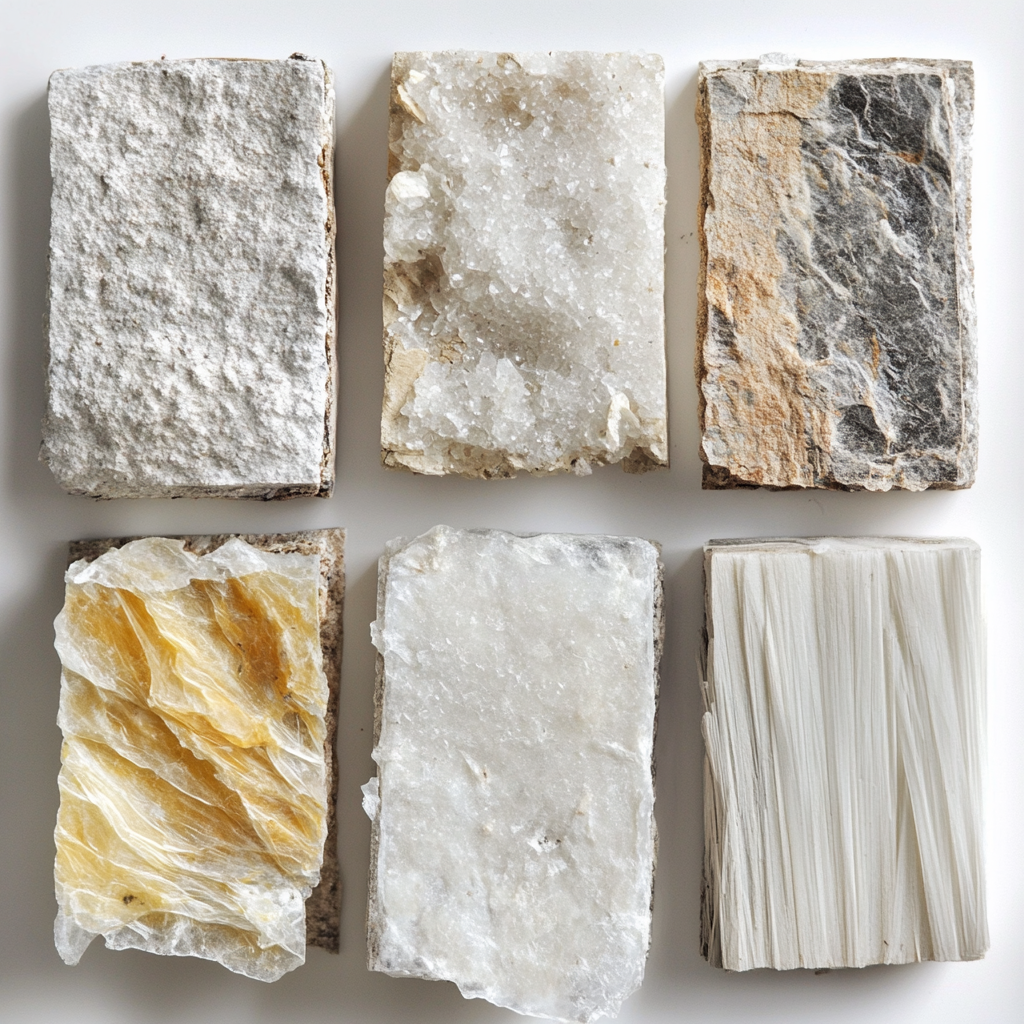
The word Asbestos refers to 6 different minerals from the two mineral families:
#1. Chrysotile Asbestos
Chrysotile asbestos, also known as white asbestos, can often be contaminated with tremolite, another form of asbestos. This mineral’s fibres are delicate, with high elasticity and exceptional heat resistance, making them useful in various asbestos products. Chrysotile asbestos is white and smooth, although its aggregate in veins is green or yellow. It is suitable to be used with cement, roofing materials, brake pads, and linings that may contain asbestos fibres.
#2. Amosite Asbestos
Amosite or Brown Asbestos are more dangerous type of asbestos. It is a solid and heat-resistant type of asbestos mined mostly in South Africa and is used in cement sheets, plumbing, and electrical systems. Exposure to Amosite at work can increase the risk of mesothelioma, lung cancer, and pulmonary fibrosis.
#3. Crocidolite Asbestos
Crocidolite, commonly known as Blue Asbestos, is the most dangerous type of Asbestos in the amphibole family. Its tiny fibres can easily lodge in the lungs if inhaled. Based on studies, it is more hazardous than other varieties, with illnesses potentially leading to death due to asbestos exposure.
#4. Tremolite Asbestos
People recognise Tremolite for its heat-resistant characteristics and ability to be woven into fabric. It is a member of the amphibole family and has strong fibres that individuals can inhale or ingest. But since asbestos is linked to cancer and other diseases, people no longer mine it.
#5. Actinolite Asbestos
Actinolite is commonly found in fibre-based paints and sealants that are black in colour. It is a brittle, fibrous material that expands when heated, making it great for insulation purposes. Actinolite is thus used in structure fireproofing and insulation.
#6. Anthophyllite Asbestos
Finally, Anthophyllite is a type of asbestos that is often used in consumer products, especially cement and insulation materials. It belongs to the amphibole family and has long, needle-like fibres that can be easily inhaled into your lungs. Magnesium and iron make up the substance, which ranges in colour from brown to yellow.
Summary – Asbestos related issues
Asbestos materials that remain intact are less likely to damage humans. However, if struck, it can cause a variety of health problems and diseases, making work-related contamination dangerous, particularly for contractors. However, as long as the company maintains everyone’s safety, no one should be exposed to any dangerous substances.
Avoid exposure to Asbestos, Contact Us Today!
Jettison is a commercial demolition business with over 40 years of experience in the field. Our mission is to deliver safe and effective demolition services in Glasgow through our demolition professionals. Please contact us so that we are more acquainted with your demolition needs.